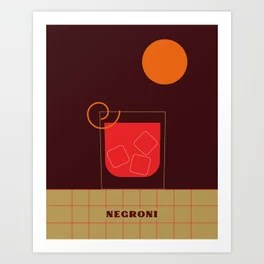
A family member told me there should be more bartending stuff in this blog for people who don’t know much about cocktails, so here we go. Number one: Cocktails beget other cocktails. There’s muddled history involved with each of them as well. Legend has it the Negroni came from a highball. What? The dude’s name, Count Camillo Negroni. A world traveler who, after developing a taste for gin in England, came into Florence, Italy in 1919 and asked for his Americano to be sans soda water and replaced with gin instead.
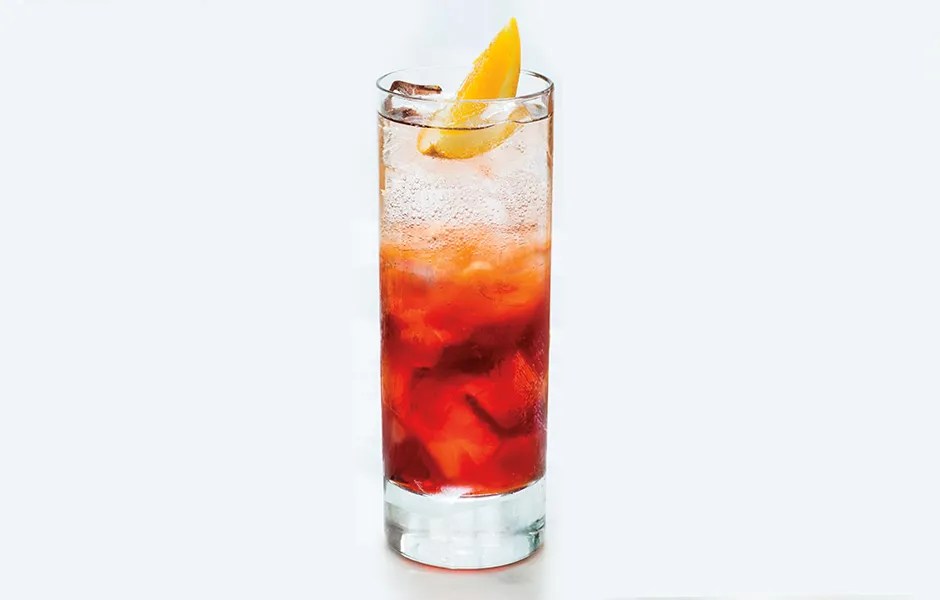
Served in a highball or Collin’s glass, the Americano (Italian, not American) is typically equal parts sweet vermouth and Campari and topped with soda water. An orange slice completes the drink. Delicious. Try one sometimes before dinner. It’s intended to boost your appetite before you eat. It’s low in alcohol and slightly bubbly.
I always thought the Negroni spawned from the Manhattan. Similar ingredients. Keep the sweet vermouth in a Manhattan and split base the rye into gin and Campari. What? Split base is a bartending term for taking the main booze in a drink, in this case, 2 oz. of rye, and switching it to two types of something else. Still following? 2 oz. of rye becomes 1 oz. of gin and 1 oz. of Campari. This isn’t rocket science. But if you’re still confused, maybe listing the basic drink ingredients of each will help.
Manhattan
2 oz. Rye Whiskey
1 oz. Sweet Vermouth
A couple dashes of bitters, place a cherry in a small coupe glass, stir, strain, serve, enjoy.
Negroni
1 oz. Gin
1 oz. Sweet Vermouth
1 oz. Campari
Stir, serve on a BFR (Big Fucking Rock), with an orange slice or expressed orange peel.
Starting to see a pattern here?
The Manhattan predates all of these. The history is fuzzy, but the first written mention was September 1882 by the Sunday Morning Herald in Olean, NY. From the Manhattan, came the Martinez, which swaps the rye whiskey for gin, adds a hint of maraschino liquor and orange bitters (if you’ve never had one, it’s quite delicious), and the Martinez then spawned the Martini (swap the sweet vermouth for dry, get rid of the maraschino). Still listening?
So, first the Manhattan, then the Martinez, then the Martini, then the Negroni? Seems to make some sense. For the non bartenders out there, who cares right? Yeah, I mean none of it really matters. It’s more cocktail nerd stuff. There’s much talk of so and so invented this one drink at this time and yada yada. I think the best way is to look at the actual printed versions of each drink to determine which occurred when.
Fun fact for cocktail nerds: The Boulevardier, at least in printed form, seems to have been invented before the Negroni. 1927 versus 1929. What is a Boulevardier you ask? It’s a Negroni with bourbon, usually a larger amount and less of the other two ingredients.
Boulevardier
1 1/2 oz. Bourbon
3/4 oz. Campari
3/4 oz. Sweet Vermouth
Stir, BFR, express with orange peel. Quaff.
And then of course, there’s riffs on the Boulevardier. It just goes on and on. This is why it’s fun and cool.
Anyway, the nifty thing about any of the above mentioned stirred drinks is that the specs (bartender word for the drink recipe) can change according to your own wishes and tastes. If you like a stronger Negroni that’s less sweet, simply add more gin and less sweet vermouth. Same goes with the Manhattan and any other stirred drink. It’s not quite as cut and dry with shaken drinks (we’ll get to that some other time). You can also go full presto chango simply by using different brands. There’s about a billion great gins out there. Experiment. Have fun.
Personally, I’m not a huge fan of Campari. It is the staple, yes, but I seem to think it’s full of food coloring and artificial flavoring. My particular favorite Negroni, as of this blog post, is as follows. The ingredients are approximate because I don’t measure my stirred cocktails at home.
Daddy’s Negroni
1 1/2 oz. Nikka Gin
3/4 oz. St. George Brovo Aperitivo
3/4 oz. Carpano Antica Formula
I dump it all into a glass with a BFR, stir with my finger and garnish with an expressed lemon peel. Yes, a lemon peel.
 The Aging Bartender
Leave a comment