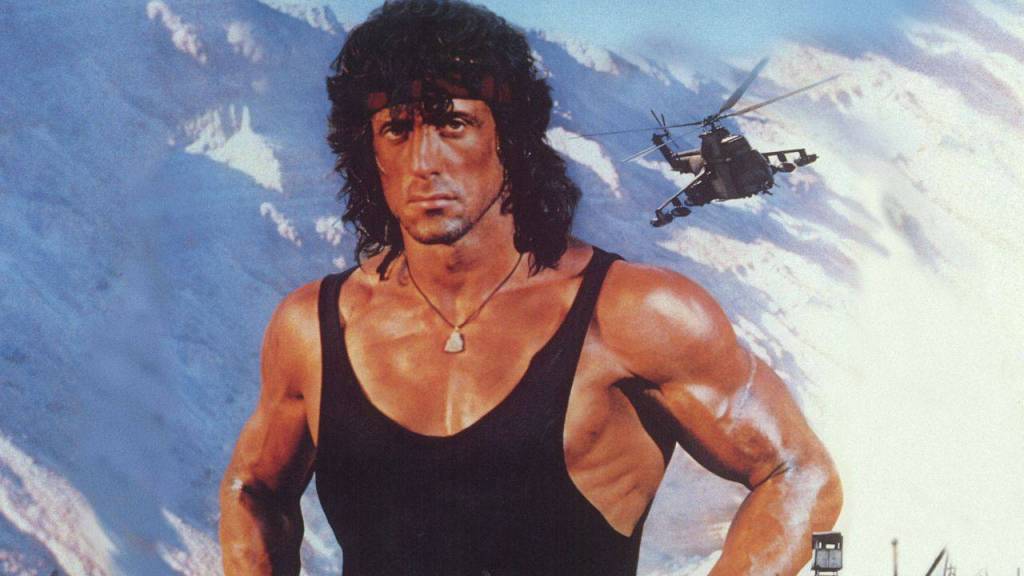
The gist here is “The call to action,” a term known mostly to screenwriters. It means at some point in almost any movie the main character will be invited by an outside force to go on his or her particular journey. What usually happens is they end up “refusing the call,” because they’re still not emotionally ready and then something happens that pushes them to take up the mission, journey, whatever, in order to send them into another realm, meet their mentor, yada, yada, go about the rest of the adventure so you can be entertained.
Classic example: Luke Skywalker is asked to save the universe. He’s the “chosen one” (or so he and everyone else thinks, ha) but he’s still a dumbass kid and says no. He comes home and sees the Empire has torched his family. The rage builds within him as he watched the twin sunset on his home planet Tatooine with some classic John Williams orchestral background music.
This theory is “The Hero’s Journey.” Popularized and put on paper by the scholar Joseph Campbell. he didn’t invent it, but he noticed that all cultures used it in some way. Yes, it is mostly reserved for masculine characters and today, it is considered that way. There is a female hero’s journey that is similar but much different in other ways. Less external, more internal.
The big thing here is that WE are the hero when we watch a show. We empathize with some aspect of the character because most underdog struggles are universal. We stay tuned because there is some part of the hero or heroes that remind us of ourselves because we’re all the heroes of our own stories.
Rambo III opens in classic late 80s style with a montage of Colonel Trautman and a CIA agent leaving to find our boy while Rambo prepares himself for a good old fashioned stick fight combat. Pulling on a pair of canvas gloves. Tying piece of cloth around his head as a makeshift headband (he’s already sweating profusely). Good stuff. I’ve got to say, Stallone is looking shredded for 42.
The opening bout is a microcosm of the hero’s journey. Rambo gets his ass kicked for most of the fight but then kicks it into a higher gear, beats the crap out of his opponent after flying into a blind rage, then gives the poor guy an opportunity to give up instead of killing him. Thus, Rambo is a badass who still adheres to his morals. He has a handle on his patented bloodlust.
I watched the first five minutes this morning while working out. I had the movie on video tape as a kid and watched it constantly, along with a massive catalog of other inappropriate for my age action movies. Van Damme, Schwarzenegger, etc. The best part of Rambo III that I noticed this morning, however, is not the ridiculous violence, explosions, bad acting, or one liners.
After the fight, we see Rambo give his fight purse to some monks. Then, when Colonel Trautman finally stalks him down, we see Johnny Boy up on the roof of a monastery, pounding away on a piece of brass with a rubber mallet and a chisel. He’s found peace, but Trautman, like any bad friend, wants him to go on an adventure and go kill some Russians. Rambo turns him down. He likes it at the monastery. “His war is over.”
Well, we watch this movie to see Rambo pump many bullets into some motherfuckers, not build monasteries in Thailand. C’mon, bro.
Then Trautman hits him with this line: “Let me tell you a story, John. There was a sculptor. He found this stone, a special stone. He dragged it home and he worked on it for months until he finally finished it. When he was ready he showed it to his friends. They said he had created a great masterpiece, but the sculptor said he hadn’t created anything. The statue was always there, he just chipped away the rough edges. You’re always going to be tearing away at yourself until you come to terms with who you are. Until you come full circle.“
Fuck yeah. That should give you chills. Trautman is hitting us with the classic philosophical a priori vs. a posteriori argument. Rambo wants to stick fight every so often to get the bad mojo out and stay in shape but spend most of his time chilling out and being at peace. Trautman is saying, no, dude, you were born to be a killing machine. This is building upon the content of Rambo II, where he falls in love with a nice lady who tells him he’s not expendable, there’s more to him than his skill for violence.
Of course, Trautman’s old ass goes out to Afghanistan and gets captured and then Rambo has to turn the violence meter back to one hundred to go save him.
So why is this all so present in my mind right now? Well, because inherent within this cheesy movie with all the explosions and a jacked, shirtless man with a speech impediment taking on an entire army, there are several lessons. Stallone co-wrote this flick. He was pretty good for his time. Let’s not forget his Oscar for writing Rocky. The biggest question I ask is: Are we really born into being who we are or can we force ourselves to change and become something else?
 The Aging Bartender
Leave a comment