
Not much to report here. A couple of days off on Sunday and Monday and zero interest in thinking about cocktails. Yesterday morning I was texting back and forth with my friend, Dante, about what I eat for breakfast, at least my ideal breakfast. It starts with a good half cup of homemade sauerkraut. Yeah, pretty gross. I’m old…I’ve got…Tender bowels. The kraut is ideal to help bring some harmony into that maelstrom of weak digestive juices and strong Negronis in the form of some probiotics and fiber which help to flush out all the ice cream and cookies.
I’m practicing my recipe writing for the book. It’s harder than it reads to do this by the way. You have to think of everything, say it in a simple way, and also realize not everyone ding dong knows their way around a kitchen. I’m pretty good, but not A level. Maybe B- at this point.
Anyway, if you’ve ever wanted to know how to make sauerkraut, here’s what you’ll need:
A medium sized fresh organic cabbage.
Decent salt (kosher works fine)
A large bowl
A mandalorian
A large, sharp knife
A digital scale
A muddler of some sort
A quart sized Ball jar with lid.
Sauerkraut is the easiest thing to make but also incredibly easy to fuck up if you ignore the biggest fermentation tenet: Keep everything clean. Other than that, it’s pretty easy but you do need the proper tools.
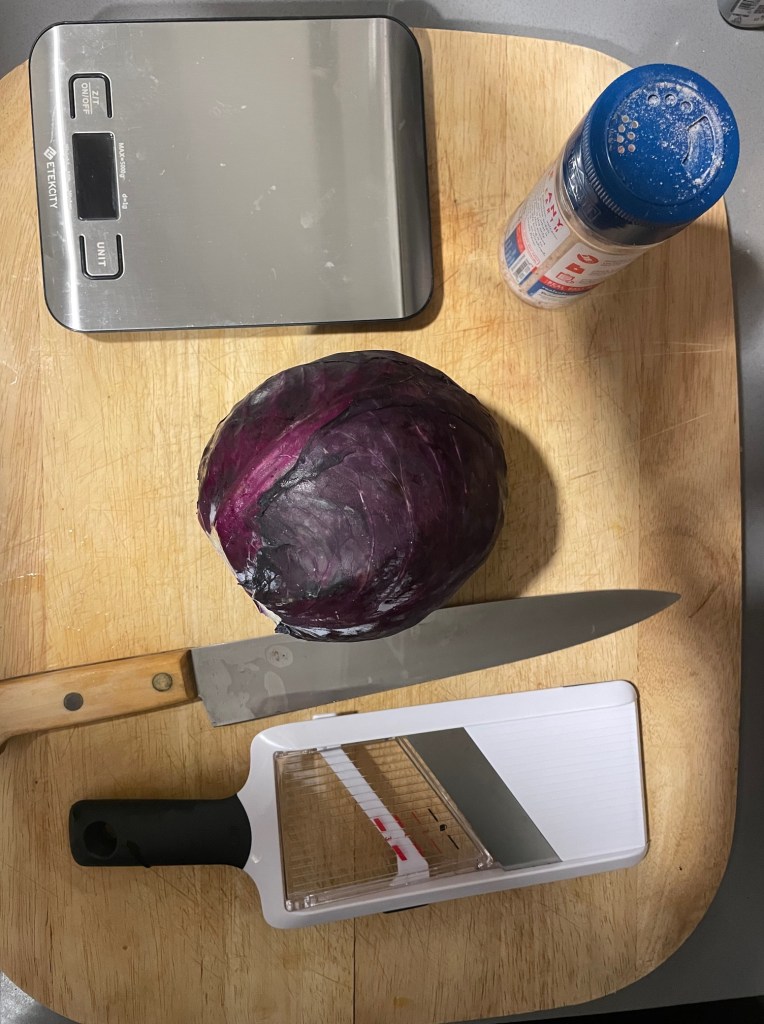
A scale and a mandolin are the key parts here. No mandolin? A good, sharp knife works just as well if you have the patience but really, a mandolin makes this so much easier and faster. This crappy Oxo job cost $18.99 over at Bristol Farms and it’s just fine for at home stuff.
Before you start cutting, you’ll need to sanitize the quart jar. Boil up some water for this puppy. While the pot is going, you can start cutting.

As far as ingredients, it’s just cabbage and salt. Yeah, you read that right.
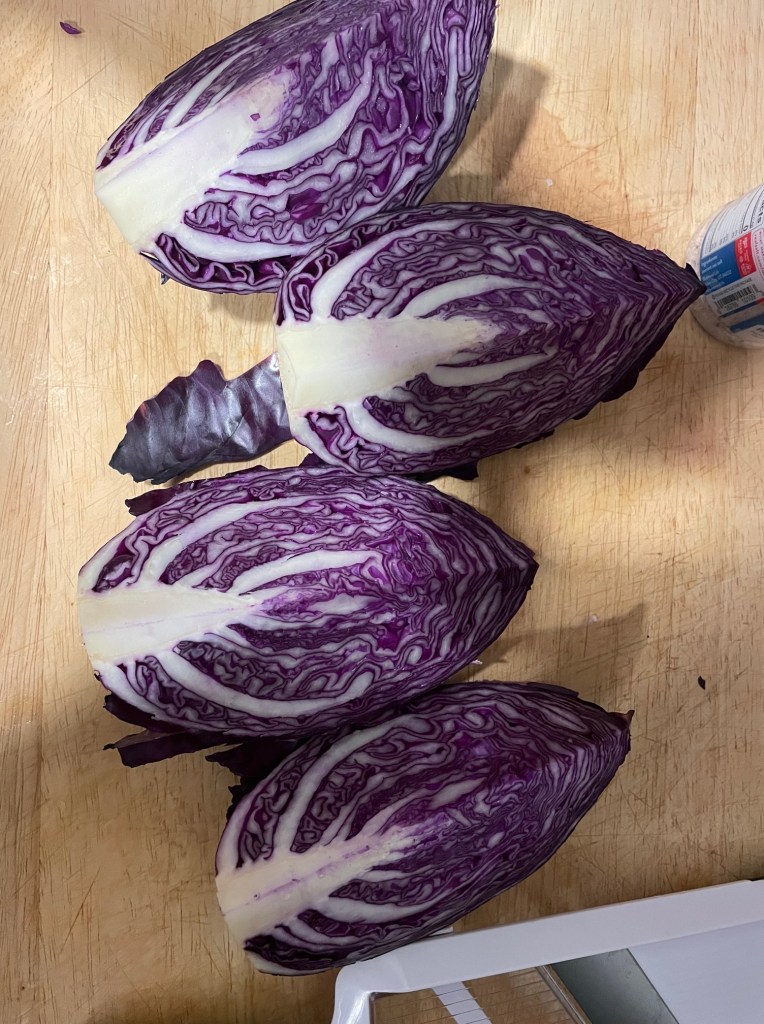
Quarter the cabbage.
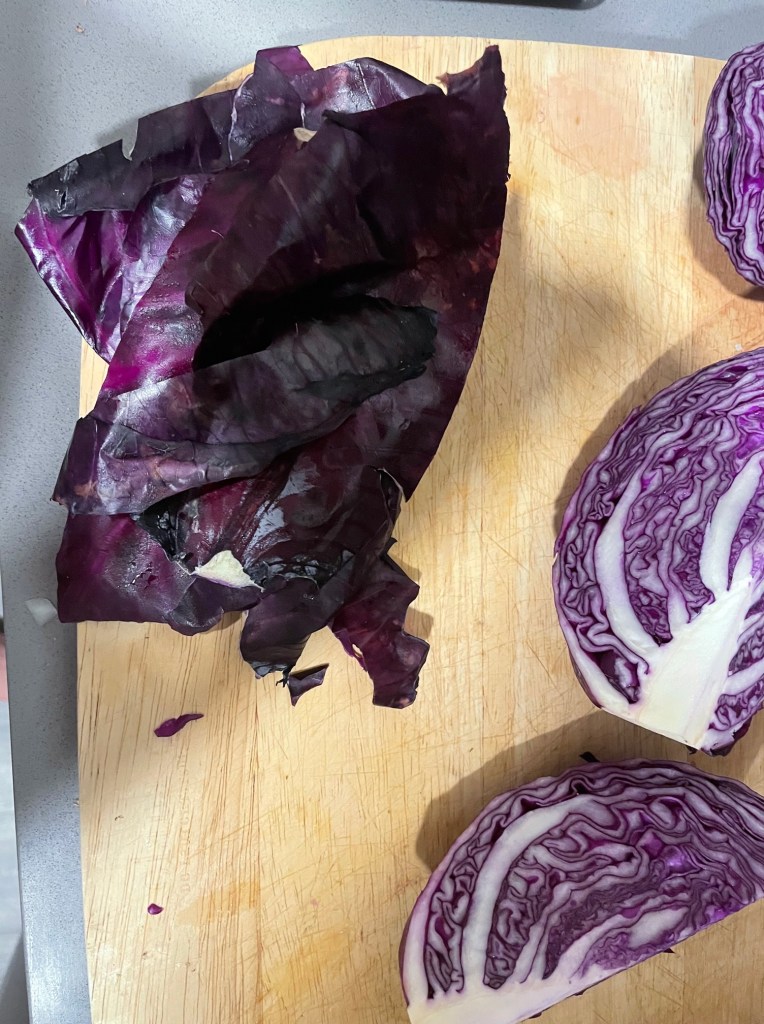
Remove the shitty outer leaves and cut the cores out. Pretty elementary. Yeah, you can probably just buy sauerkraut at the store and save yourself a lot of trouble but this tastes better and is “fresher.”
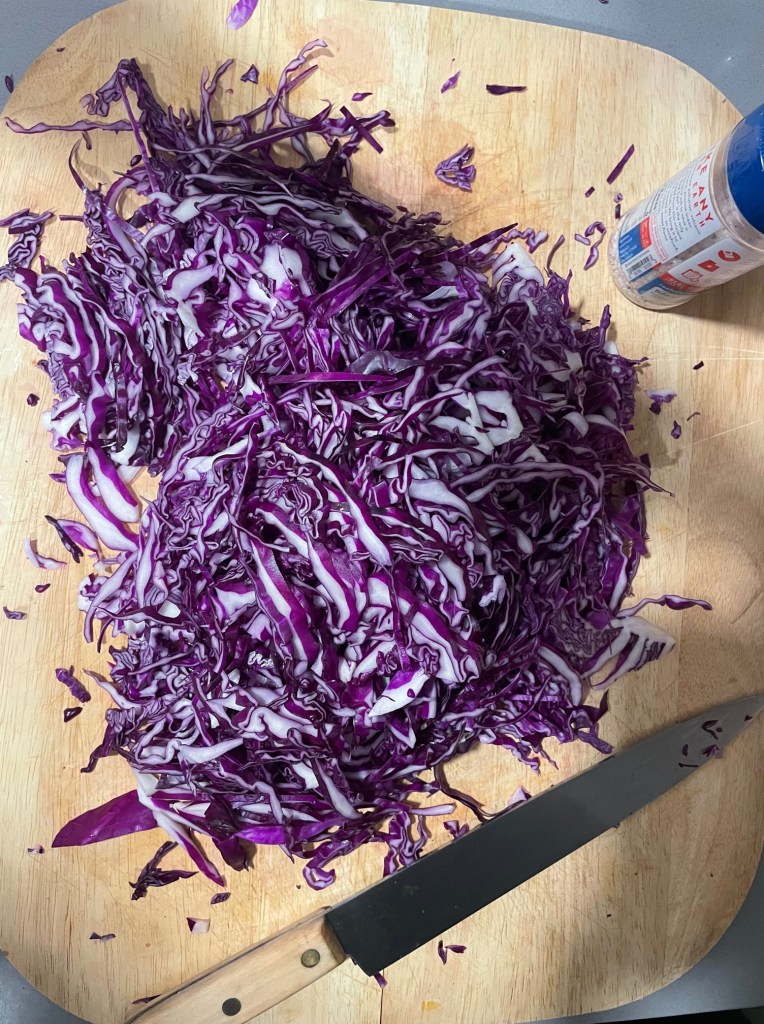
Believe it or not this immense pile of shredded cabbage will fit into that quart jar. Trust me. For some reason I just thought of how handy Wolverine would be in a kitchen. I wonder if he cooks in his down time?

Put your bowl on the scale and zero it out. If you don’t know what this means, you should stop now. When the scale reads 0, put the shredded cabbage in.
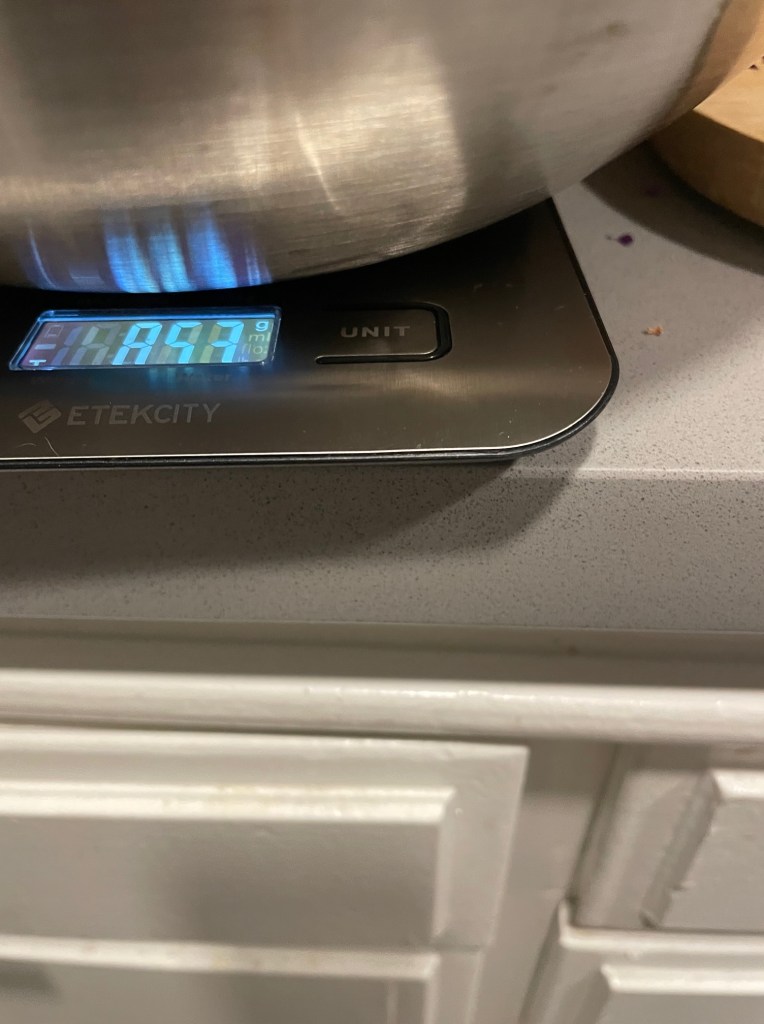
Sans bowl, we’ve got 853 grams of cabbage here. Now, there’s some really easy math to apply when we calculate how much salt goes in here. The magic realm is 2%. So, just move your decimal point over two notches and multiply by two. This is sort of the same way you’re supposed to calculate a 20% tip, by the way. Confused? Watch this: 853.00 = 8.53 x 2 = 17.06 = 18. Wow, magic. Yeah I added a gram out of paranoia because I’ll lose a few granules of salt when mixing with my hands.
Zero the scale out again and add your salt, then mix it up (make sure your hands are super clean) and let it sit about a half hour. When the time passes, start to be a little mean to your kraut with a muddler or the end of a broom handle, whatever you’ve got handy. Just start to smash it a bit to really get the salt in there. After a few minutes you’ll start to see some liquid accumulate. That’s good.

Your pot should be boiling by now. Pour the hot water into the jar and let it sit a few minutes. There should be some water left in the pot. Throw the lid in there to sanitize it.
When you’re feeling good about this, dump the hot water in the sink and let the jar cool down a bit before adding the salty cabbage.
When you add the cabbage, push it down with your muddler or sawed off plunger…Whatever implement you have. The big trick here is to make sure the cabbage is tightly packed so it is underneath the water that will accumulate in the jar, like so:

Read that again. The cabbage must be under the water. That’s the safe zone.
Beautiful right? Place the jar inside a bowl and then in a dark place. No, a physical dark place. The bowl is there as a safety net for your cabinets in case the kraut bubbles up and over which it often does.
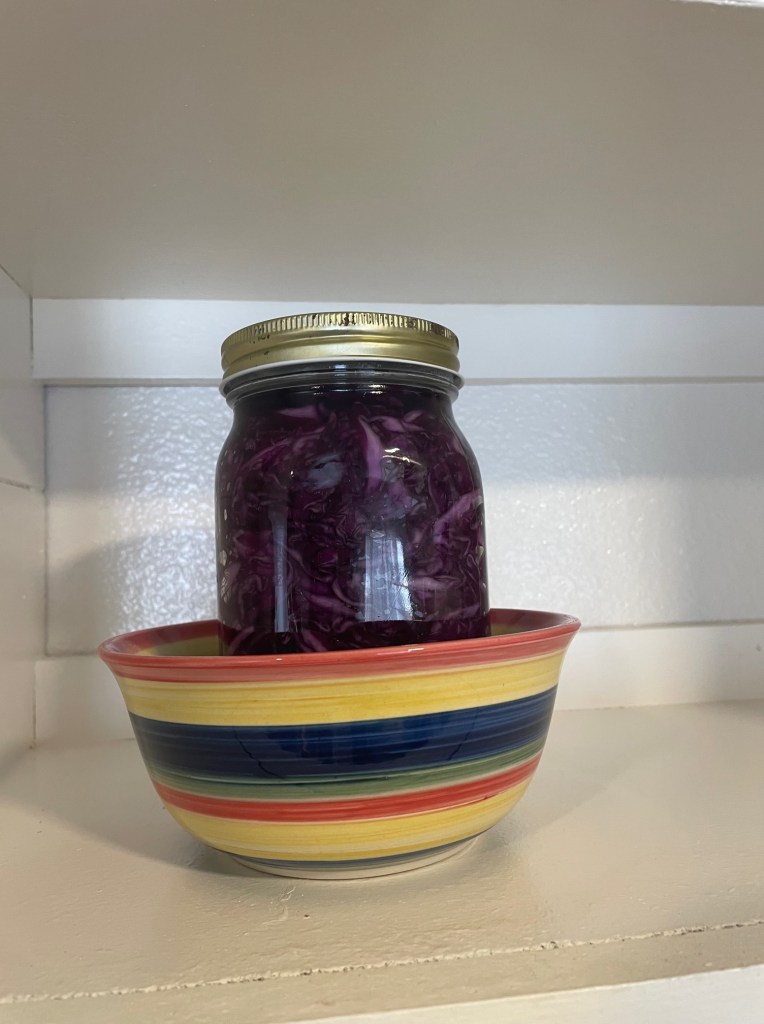
And that’s it. You’ll know it’s going in a couple of days. There will be some bubbles and it’ll smell like sauerkraut. If it’s bad, you’ll also know right away because it’ll smell like a dead animal. The whole thing shouldn’t take more than three days. Enjoy.
 The Aging Bartender
Leave a comment