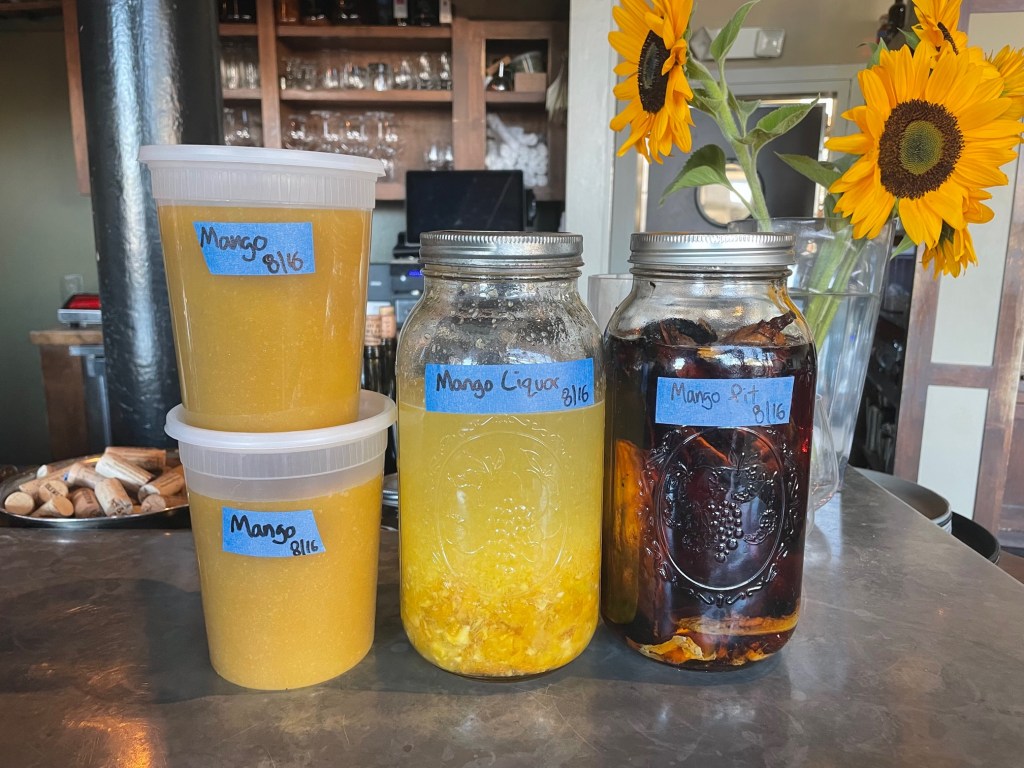
Isn’t she lovely? Look up and you’ll see a “closed loop” method we’ve been working into the program a bunch during this nice wave of stone fruit and corn. It’s a whole system now and I’m ashamed we haven’t been as aware of it in the past. Although we’ve had similar techniques where we employ “zero waste” or, as I’d rather call it “thoughtful usage,” with other cocktails we have used everything one fruit has to offer but oftentimes parcel it out in two or three different drinks. Now the idea is one fruit, one drink, which is pretty damn easy with stone fruit, as you will see. Anyway, this is the current thought process. So, instead of making syrup and throwing everything else away, we keep the leftover dregs as well as the interior of the fruit–the weird mango husk and the flavor packed pit inside. Hey, it’s not everyday you get some local mangoes. Yeah, sorry to everyone who lives in moderate or cold climates…We’ve got our own mangoes here in SoCal…
I’m not sure who originally coined the term “closed loop.” The Koji Kid uses it a lot with his stuff. I don’t know. I guess it applies here. I’ll coin it myself by saying “thoughful usage” from now on just because “zero waste” is a bit of a misnomer. I mean, it’s a bit picky with words but there’s always waste of some sort. Even if you use the ingredient to it’s fullest 99% of the time there’s going to be waste, washing the glass, etc. We’re always doing our best and can always do better.

Anyway, let’s get into this damn mango.
The mango syrup was made with both supple skins and tender flesh (yes, that was intended to be creepy) and left to sit in a jar for a few days with equal parts sugar. This creates some mild fermentation action. We’ve been doing this at Rustic since I started there back in… The sugar absorbs the liquid from the fruit and if you use organic fruit there’s bound to be a little yeast left on the skins which helps stimulate the fermentation. If you leave it long enough it’ll get less sweet and start to turn to alcohol (if you’re lucky) but to go full booze you’ll need to put an airlock on it to allow any excess gas to escape.
Hey look, someone is getting slightly better at remembering to take pictures of all this stuff.
Anyway, once this sits for a couple of days, we stick blend the whole thing and put it through the trusty chinois. Part of the problem is there will be some dregs leftover. A sticky sweet mango-sugar syrupy mess. In the past we have smeared it on a rack and put it in the dehydrator and made fruit leather with it, but the “in” thing to do is to throw it in a jar with some alcohol–in this case, white rum- to create a cordial or liqueur. You could also make marshmallows if you had some real ambition.
And so we are now left with the big ol’ mango pit. Well, gotta roast it to get rid of any bad chemicals lurking in there, right? The roasting also brings some great flavor to an otherwise kind of unflavorful husk of fibrous annoyance that should be in the trash, but isn’t. Anyway, 20 minutes at 350° will do the trick.

The result, to my twisted mind anyway, are these madeleine looking puppies. A grotesque charred madeleine made by a toothless reprobate in order to feed some crazed Cthulhu monstrosity. You could prank your friends with these…Watch and laugh as they break a tooth biting into one. Just a suggestion.
When you crack these open, life gets even more weird.
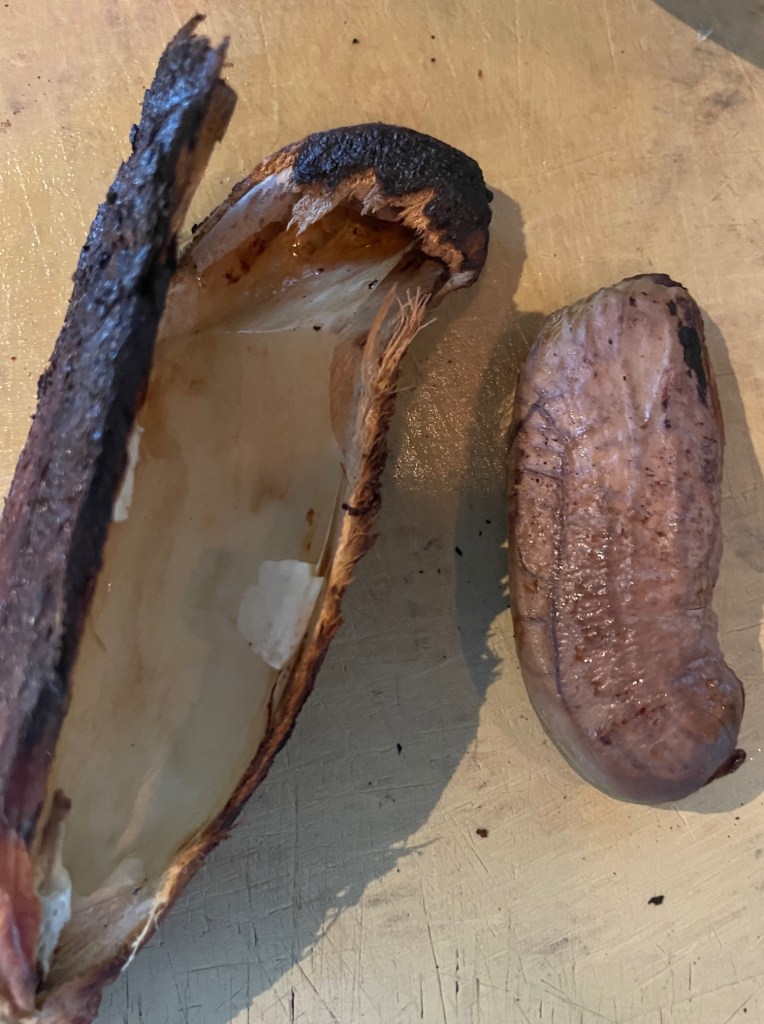
There it is. The mango seed looking…more than vaguely phallic. Hey, I call it as I see it. This goes in a jar (jar of dicks?) along with the husk and yes, ulp, vodka. You’ll almost never hear me utter the dreaded “V” word here but it’s neutral and I want the flavor of the pit and husk to come through.
That’s it for now. That’s our closed loop, zero waste, thoughtful usage wisdom for the day. Get out there.
 The Aging Bartender
Leave a comment