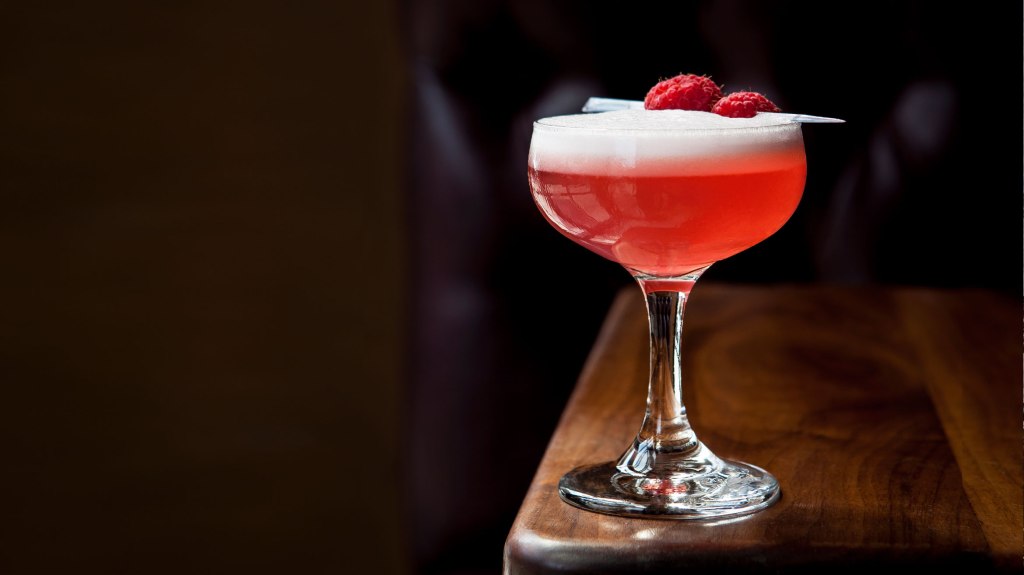
This will hopefully wrap up all of this whiskey sour/egg white nonsense. I don’t know how I started walking down this path. I thought it would be a simple explanation. Hard time catching up? Read parts one and two first, then circle back. This originally was just a rant about how annoying egg white cocktails–ahem, whiskey sours–are to make, and then became an investigation into where and when the egg white first appeared in the drink itself as many online sources state it was in early texts which is not true. I’m not doing this to prove anyone wrong, by the way, I think this is just satisfying some weird cocktail nerdism of mine and hopefully yours too. At least three people have contacted me with their support, so I guess that’s all that matters.
First off, let’s go over the facts we’ve discovered over the last couple of days here:
- The whiskey sour does not appear in Jerry Thomas’ book How to Mix Drinks or The Bon Vivant’s Companion from 1862.
- The first mention of any egg white appearing in a whiskey sour or any other type of sour for that mater was in The U.K.B.G. Guide to Drinks, from 1953 (Page 154). In the book, under the heading of rum, gin, whiskey, and brandy sours the recipe recommends adding a few drops of egg white for improvement.
I’m beginning to think the introduction of egg whites to whiskey sours came not from the early days but from more modern times. I’m guessing the early 2000s. Unfortunately, most of my modern cocktail books are at work. I’m really chomping at the bit to look through the original Death & Co. book as well as the marvelous tome by David Wondrich, The Oxford Companion to Spirits and Cocktails. I’m going to hit these two up when I have time today.
Before I draw these conclusions, however, I’ve got two leads. One, the pisco sour, and two, the Clover Club. Yup. Unfortunately, there’s more disinformation here as the pisco sour is said to have been created in 1915 and modeled after the whiskey sour. Now, I learned this from Wikipedia which is not a reliable source but whoever wrote the article mentions cocktail historian Dale Degroff as the originator of the information. I can safely say if the pisco sour was modeled after the whiskey sour, then it had no egg white. But, according to many sources, the egg white was a component. However, there’s no printed version of the recipe.
The first mention of the Clover Club was supposedly 1901 in The New York Press which makes it the first gin sour with an egg white and not a whole egg. And well, well, I checked out the 1930 book simply entitled Cocktails by Jimmy Late of Ciro’s London and voila, page 29, there it is in all it’s glory almost entirely as we make it today…Ish…
Clover Club
4 parts Dry Gin
2 parts French Vermouth
1 part Lime Juice
1 part Grenadine
1 white of an Egg per cocktail
Italian Vermouth may be substituted if desired.
The book is a very coherent piece of history with cocktails such as the Manhattan, Martinez, and Martini. And here’s the kicker, no mention of either the pisco sour or the whiskey sour. Remember now, that England did not suffer through Prohibition like the United States. Flipping back a little further to a 1923 book, again from Ciro’s of London, entitled ABC of Mixing Cocktails we see, drum roll, a recipe for a Clover Club with the first ingredient being, you guessed it, “1 white of Fresh Egg.” No mention of egg white in the recipe for the brandy sour or in the whiskey sour entry which states “Prepared the same way as Brandy Sour.” Also, no mention of pisco within the pages.
This is by no means an exhaustive bout of research on my part but I think we can safely say at this point that the Clover Club was the first egg white drink in print which was first designed from a melding of a gin flip (sans egg yolk), a gin sour, and a gin daisy (grenadine, not liqueur in those days).
Going back to 1916 and Recipes for Mixed Drinks by Hugo R. Ensslin, a famous book in that it contains a recipe for the Aviation and first equal parts Alexander, we see, yup, Clover Club. The recipe does not contain any vermouth but is otherwise with grenadine, gin, and yes, egg white. I don’t think I need to continue.
In the early 2000s when we sprang from the dark ages of Alabama Slammers and Cape Codders, the recipes contained within these old books became the basis for the cocktails we know and love today. The Clover Club specs were simply tweaked and shifted over to the whiskey sour, the rum sour became the daiquiri, the gin sour became the gimlet, and the whiskey sour was made with egg white.
One other cool note is that the original Clover Club cocktail was a mash up of three different well known cocktails from the pre-prohibition era. So, it’s good to know bartenders were screwing around with drink specs in order to come up with new cocktails even in the early days. Now, I haven’t pored over all the old tomes from back then as it would take hours, but I’m very certain of the research I’ve done here and would love for someone else to delve and prove me wrong.
 The Aging Bartender
Leave a reply to The_Craigen Cancel reply